You’ve got a medical device idea that could actually help people. Maybe it’s a new surgical instrument, a diagnostic tool, or a component that makes an existing device work better. You’ve done the research, talked to doctors, maybe even built a prototype in your garage.
Now comes the hard part. Getting it manufactured at scale.
And if your device involves plastic components – which most do – you’re going to need injection molding. Which sounds straightforward until you start getting quotes and realize you’re navigating tooling costs, minimum order quantities, FDA compliance requirements, and contracts that lock you into terms you don’t fully understand.
Here in Southwest Michigan, we’ve got a solid manufacturing base with companies that know medical-grade production. But finding the right partner and structuring the relationship properly? That’s where a lot of startups stumble.
Before you sign a manufacturing agreement or commit to expensive tooling, let’s talk about what you’re actually getting into. And if you need help reviewing those contracts and protecting your interests, The Law Offices of Paul H. Appel works with startups navigating complex supplier and manufacturing relationships.
Why Injection Molding Isn’t Like Other Manufacturing
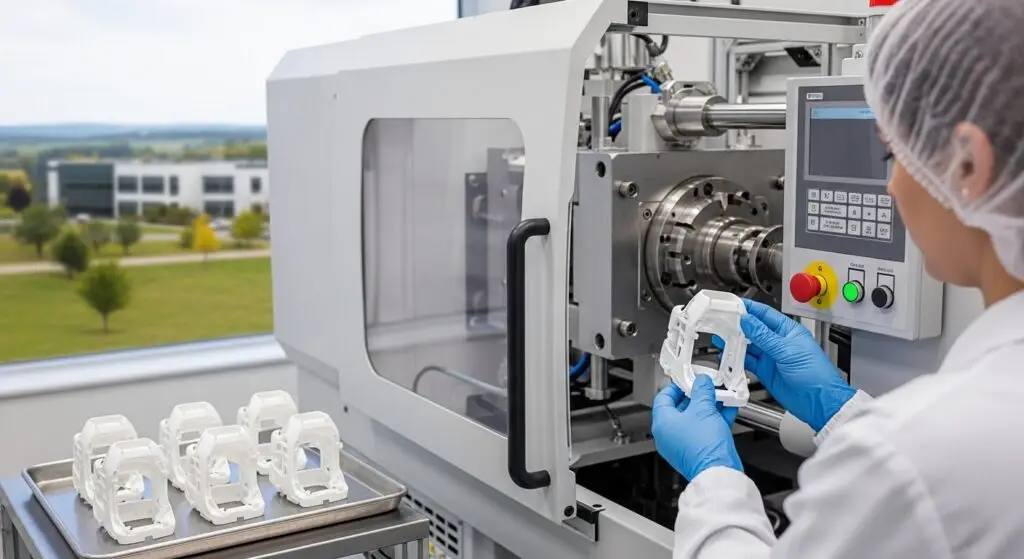
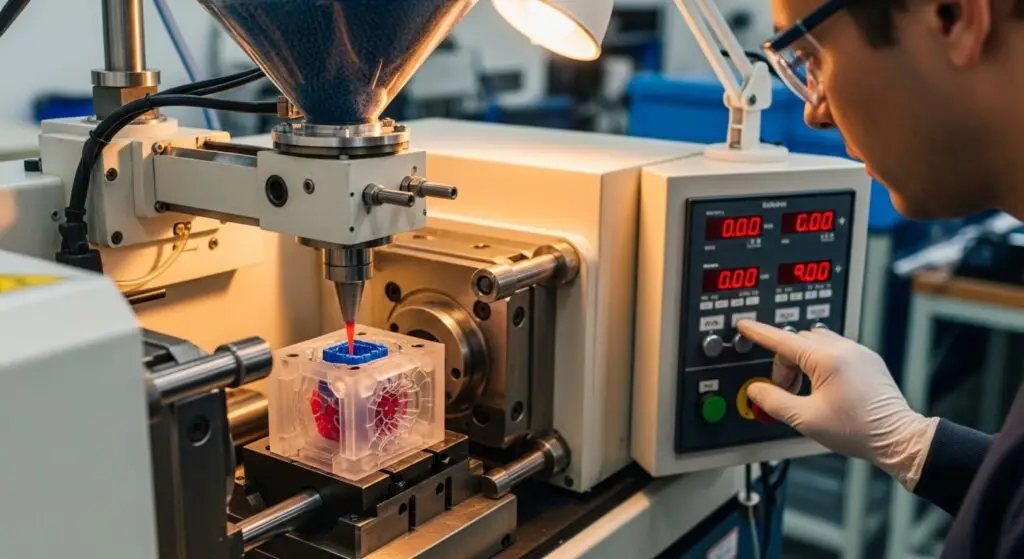
Most medical devices have plastic components. Housings, connectors, dispensing mechanisms, sterile barriers – injection molding is how you make these parts in volume at a cost that makes sense.
But here’s the thing about injection molding for medical device startups. You’re not just making widgets. You’re making components that have to meet FDA regulations, maintain tight tolerances, work with biocompatible materials, and perform consistently across thousands or millions of units.
That creates a completely different relationship with your manufacturer than, say, a company making plastic toys or consumer products.
First, the tooling costs are real money. We’re talking $15,000 to $100,000 or more for a single mold, depending on complexity. For a startup burning through investor cash, that’s a significant commitment. And once that tool is cut, changes are expensive or sometimes impossible.
Second, you’re dealing with materials that cost more and require special handling. Medical-grade resins, biocompatible polymers, materials that can withstand sterilization – these aren’t off-the-shelf plastics. Your manufacturer needs to source them properly, store them correctly, and document everything for regulatory compliance.
Third, the quality requirements are stringent. A consumer product with a small defect rate might be acceptable. A medical device with the same defect rate could hurt patients and destroy your company. You need process validation, statistical process control, clean room manufacturing depending on the device classification – all of which costs money and requires expertise.
And fourth – this is the part that catches people – the contractual relationship with your injection molding partner becomes critical to your business survival. If they can’t deliver on time, you miss market windows. If quality slips, you’ve got regulatory problems. If they decide to raise prices after you’re locked in, your margins evaporate.
What Actually Goes Into Medical Device Injection Molding
Let’s walk through what this process really looks like, because understanding it helps you negotiate better and avoid expensive mistakes.
Design for manufacturability happens first, or at least it should. Your prototype might work great, but can it actually be injection molded at scale? Does it have undercuts that require complex tooling? Wall thicknesses that will warp or sink? Features that are impossible to eject from the mold?
A good manufacturing partner in Southwest Michigan will review your design and tell you what needs to change. A bad one will just quote the job and let you discover the problems after you’ve paid for the tool.
Material selection matters more than people realize. You might want a specific polymer because it has the right mechanical properties, but can it withstand the sterilization method you’re planning to use? Is it actually approved for the type of patient contact your device involves? Does it meet ISO 10993 biocompatibility standards?
And here’s something that trips people up – material costs can fluctuate. That resin you’re planning to use might be readily available today and on backorder for six months next year. Your manufacturing contract needs to address how material shortages and price changes get handled.
Tooling design and build is where you’re making big bets. You can go with a cheaper, single-cavity tool that produces parts more slowly. Or you can invest in a multi-cavity tool that costs three times as much but brings your per-unit cost way down once you’re at volume.
The catch? If you’re a startup, you don’t really know what your volume will be. Build too small, and you can’t meet demand. Build too bi,g and you’ve wasted capital on capacity you won’t use for years, if ever.
Southwest Michigan has experienced tool makers who can guide you through these decisions, but ultimately, you’re making educated guesses about your future production needs.
Process validation is required for medical devices. You can’t just run parts and ship them. You need to prove that your molding process consistently produces parts within specification. That means initial qualification runs, ongoing process monitoring, documentation of every parameter, and periodic revalidation.
All of that takes time and costs money. Your manufacturer should build these costs into their quote, but not all of them do. Then you’re surprised when they bill you for validation work you thought was included.
Quality systems and documentation become part of your device master record and design history file. The injection molding process parameters, the material certifications, the inspection records – all of it feeds into your FDA submission and becomes part of your quality management system.
If your manufacturer isn’t used to working with medical device companies, they might not understand or care about this level of documentation. That becomes your problem when you’re trying to respond to FDA questions and you can’t get the data you need from your supplier.
Where Startups Get Into Trouble
I’ve seen enough medical device startups struggle with manufacturing to know the common pitfalls.
Choosing a manufacturer based solely on price is probably the biggest one. Yes, you’re trying to conserve cash. But the cheapest quote often comes from a company that doesn’t fully understand what they’re getting into with medical device work.
They lowball the tooling cost, then hit you with change orders. They don’t include validation in their quote. They don’t maintain the documentation you need. They’ve never dealt with an FDA inspection and panic when one happens.
You end up spending more fixing their mistakes than you would have spent going with a more experienced, slightly more expensive partner in the first place.
Not protecting your intellectual property in the manufacturing agreement is another mistake. Your mold designs, your process parameters, your material specifications – these are valuable. You need clear contractual language about who owns what, what the manufacturer can and can’t do with your information, and what happens to the tooling if the relationship ends.
I’ve seen situations where a startup wants to switch manufacturers and discovers the original company claims to own the tooling. Or where a manufacturer starts making similar parts for a competitor using knowledge they gained from your project.
Failing to address capacity and priority comes back to bite people. Your contract should specify minimum order quantities you’re committing to, but also the maximum capacity you can count on. What happens if your device takes off and you need to triple production in three months? Does your manufacturer have the capacity? Are they obligated to provide it? Or will you be stuck watching your competitor steal market share while you wait for parts?
And what about priority when things get busy? If your manufacturer also makes parts for established medical device companies with bigger volumes, whose orders get filled first when capacity gets tight?
Ignoring the regulatory partnership is a problem unique to medical device manufacturing. Your injection molding partner isn’t just a supplier – they’re part of your quality system. The FDA can and will inspect them as part of auditing your operation.
You need contractual rights to audit them, to get documentation when you need it, to ensure they maintain appropriate quality systems. And honestly, you need to make sure they’re not going to be a regulatory liability that tanks your whole company.
Getting the Contracts Right
This is where working with an experienced business attorney becomes essential, even for startups trying to watch expenses.
A good manufacturing agreement for medical device injection molding should cover a lot of ground. Scope of work, obviously – what parts they’re making, to what specifications, using what materials. But also tooling ownership, intellectual property protection, quality requirements, inspection and testing protocols, and documentation obligations.
Pricing terms need more thought than just a per-unit cost. What about tooling amortization? Validation costs? Material price adjustments? Volume discounts? Set up charges for small runs?
And critically, what happens if you need to make design changes? Every change potentially affects the tool, the process, the validation. Who pays for what? How do change requests get evaluated and quoted?
Delivery and capacity commitments should be specific. Lead times, minimum and maximum order quantities, forecasting requirements, inventory holding, what happens if they can’t deliver on time.
A lot of manufacturers want flexibility to adjust their schedules based on their overall capacity. That’s fine when you’re an established customer with predictable demand. For a startup, you need more certainty even if it costs a bit more.
Quality and compliance terms are critical for medical devices. Right to audit, access to documentation, compliance with ISO 13485 or whatever quality standards apply to your device class, procedures for handling nonconforming products, and responsibilities during regulatory inspections.
If the manufacturer pushes back on these terms, that’s a red flag. Any company experienced in medical device work knows this stuff is standard.
Termination and transition provisions matter more than you think. What if you need to switch manufacturers? Can you get your tooling? Your process documentation? Your material qualifications? Or are you starting from scratch?
Some manufacturers will include terms that make it prohibitively expensive to leave, essentially holding you hostage. You want to avoid that situation by negotiating fair transition terms up front.
What You Should Do Right Now
If you’re a medical device startup in Southwest Michigan considering injection molding, start by really understanding your regulatory pathway. Class I, II, or III device? 510(k) or PMA? What quality system requirements apply? Your manufacturing needs flow from these answers.
Talk to multiple manufacturers. Don’t just get quotes – have real conversations about their experience with medical devices, their quality systems, their capacity, and their willingness to work with a startup. The right partner will ask you good questions about your regulatory strategy and help you think through the manufacturing implications.
Get everything in writing before you commit. The verbal promises about capacity, pricing, support – they don’t mean anything unless they’re in your contract. And have someone who understands supplier agreements review the terms before you sign.
Think about your material supply chain. Is your manufacturer sourcing the medical-grade resin, or are you? Who owns the relationship with the material supplier? What happens if there’s a shortage or quality issue?
Plan for validation costs and timelines. This isn’t just running some parts and calling it done. You’re proving your process works consistently. Budget time and money for this phase.
Consider your longer-term strategy. Are you planning to eventually bring manufacturing in-house? License your device to a larger company? Get acquired? Your manufacturing agreement should support, not hinder, these potential paths.
Making This Work for Your Startup
Look, injection molding for medical device startups is complicated. You’re dealing with technical manufacturing challenges, regulatory requirements, significant capital commitments, and contractual relationships that can make or break your company.
But it’s also totally doable. Southwest Michigan has good manufacturers, experienced tool makers, and a workforce that understands precision manufacturing. You just need to approach it strategically rather than reactively.
The startups that succeed are the ones that treat their manufacturing partner as exactly that – a partner, not just a vendor. They invest time in the relationship, communicate clearly about their needs and constraints, and structure contracts that work for both parties.
And they get good advice before they commit to expensive decisions that are hard to undo.
While The Law Offices of Paul H. Appel is based in New Jersey, we work with startups and small businesses navigating complex supplier and manufacturing relationships across the country. We understand the contractual issues that matter for growing companies, especially those dealing with technical manufacturing and regulatory requirements.
Before you sign that manufacturing agreement or commit to tooling, reach out. Email paul@paulappellaw.com or call our office at 11 Crestwood Drive in Freehold. Let’s review what you’re getting into and make sure your contracts actually protect your interests.
Because you’ve worked too hard on your medical device innovation to let a bad manufacturing relationship derail everything.