
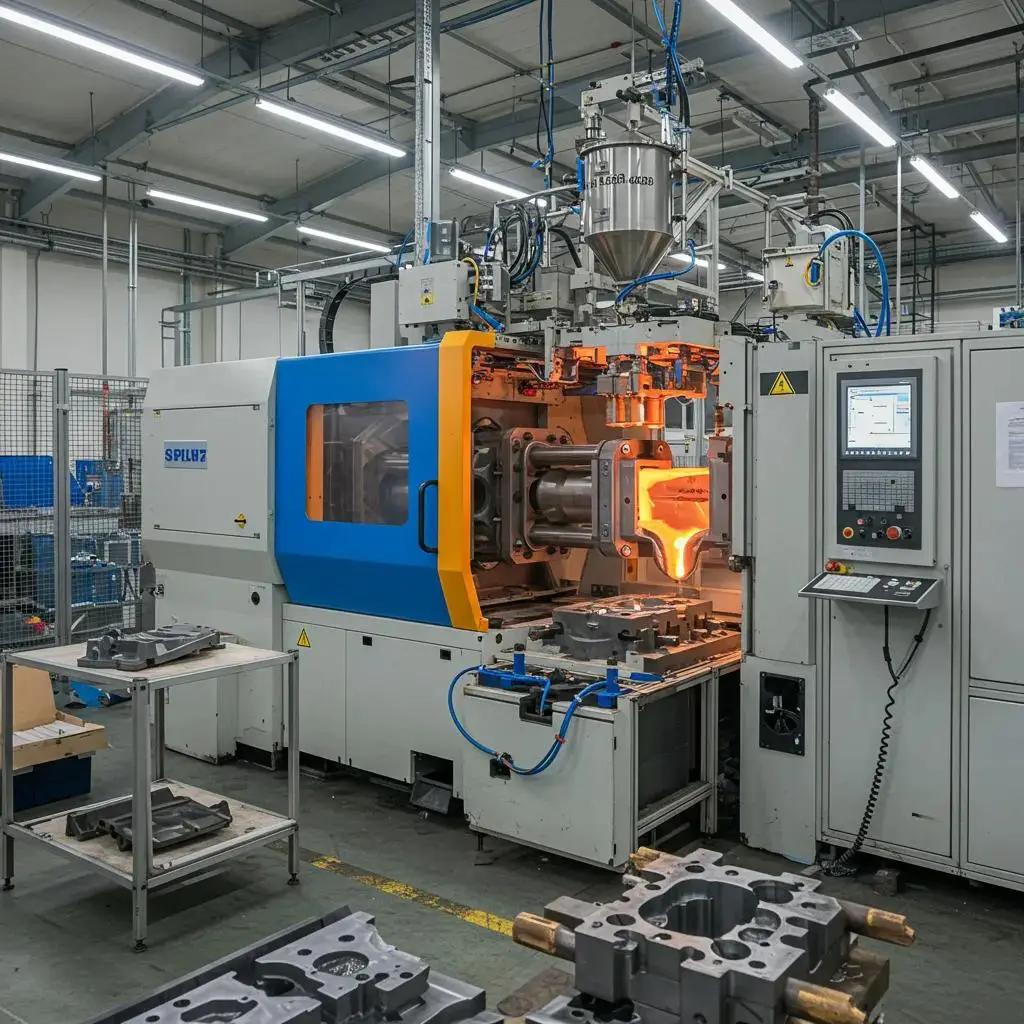
Precision Plastic Injection Molding for Automotive in Chicago: Your OEM & Manufacturer Advantage
Plastic injection molding is the cornerstone of high-volume, precision automotive components, driving vehicle lightweighting, cost efficiencies, and unparalleled design freedom. As leading OEMs, engineers, and product developers demand increasingly tighter tolerances, cutting-edge materials, and accelerated timelines, a deep understanding of Chicago’s automotive plastic injection services is paramount. This guide demystifies the core process, illustrates how local expertise expedites project lifecycles, explores leading materials and innovative techniques, and showcases how Ronningen Research & Development delivers a seamless, integrated service—from initial design and tooling to molding, assembly, and rigorous quality assurance. By detailing key capabilities such as custom tooling, precision manufacturing, advanced resins, sustainability initiatives, and industry certifications, this article provides actionable insights to optimize your automotive plastic fabrication and launch successful custom projects.
Why Partner with Ronningen Research & Development for Chicago Automotive Plastic Injection?
Ronningen Research & Development offers a comprehensive suite of design-to-assembly services for automotive plastic injection molding in Chicago. We combine rapid prototyping, precision tooling, and full-scale production capabilities to meet the most demanding OEM specifications. Our local presence ensures faster design iterations, streamlined communication, and dedicated support for complex assemblies, significantly reducing lead times and minimizing logistical complexities.
What Distinct Capabilities Does Ronningen Bring to Chicago Automotive OEMs?
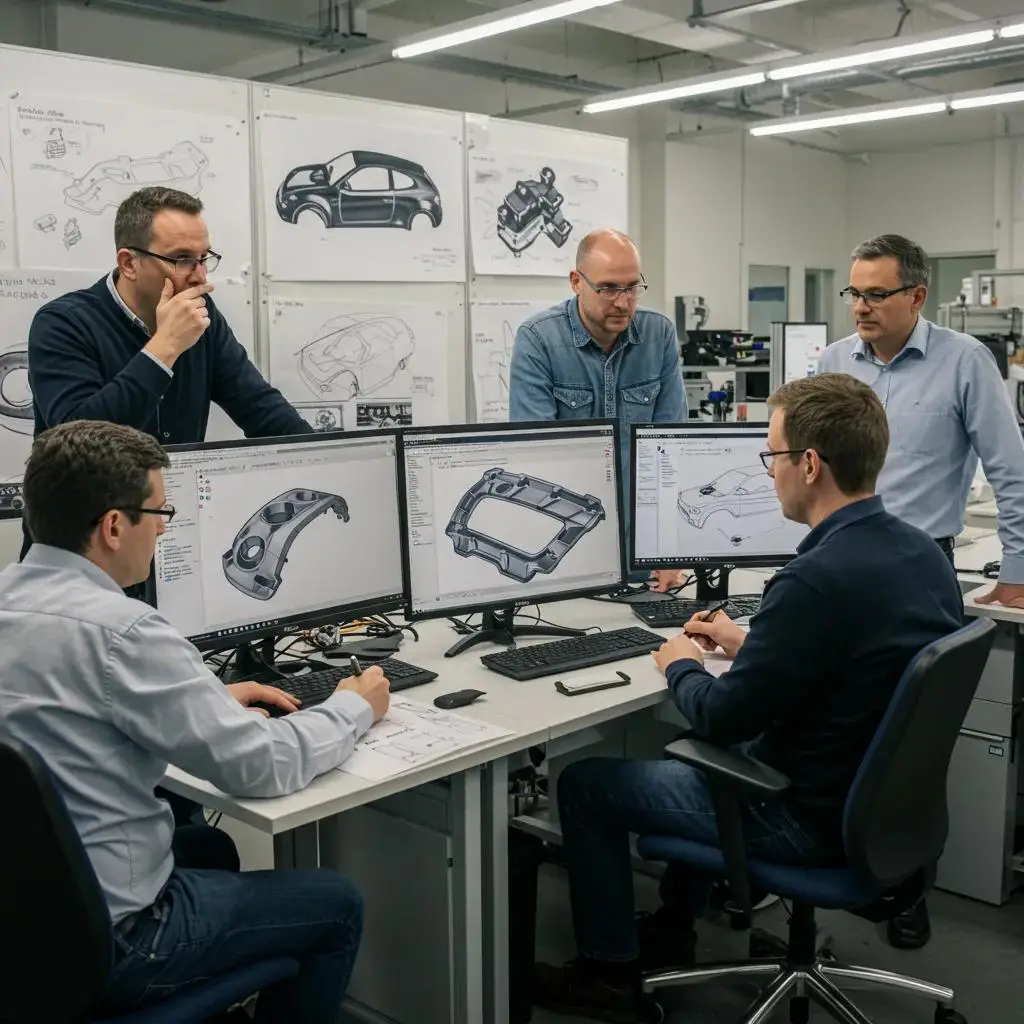
Ronningen Research & Development excels in custom tooling design and in-house mold manufacturing, accelerating both prototype validation and production ramp-up. Leveraging integrated CAD/CAM workflows, we develop molds with tolerances as tight as ±0.001 inches and optimize gate placement for perfectly balanced fill patterns. Our proprietary process simulations proactively identify potential warpage and shrinkage, allowing engineers to finalize designs with confidence, avoiding costly, time-consuming iterations.
How Does Ronningen Guarantee Quality and Precision in Automotive Plastic Parts?
Exceptional quality in automotive plastics starts with meticulous design for manufacturability and extends through robust, multi-stage inspection protocols. Ronningen Research & Development employs statistical process control, automated cavity-to-cavity monitoring, and coordinate measuring machine (CMM) verification to ensure unwavering dimensional accuracy. Real-time melt-flow analysis and post-mold annealing further stabilize crystalline resins, guaranteeing consistent mechanical properties and long-term component durability.
What Are the Advantages of Collaborating with a Chicago-Based Plastic Injection Molder?
Engaging with a local Chicago molder significantly reduces transportation expenses, compresses development timelines, and fosters direct, hands-on collaboration between your engineering teams and our production specialists. Our regional proximity facilitates same-day mold troubleshooting, rapid sample shipments, and efficient just-in-time inventory management. These benefits translate directly into accelerated time-to-market, enhanced supply-chain resilience, and more agile support for design modifications or urgent reorders.
Understanding Plastic Injection Molding and Its Crucial Role in Automotive Manufacturing
Plastic injection molding is a sophisticated process where thermoplastic granules are heated to a molten state, injected under high pressure into precision-engineered steel molds, and then cooled under controlled conditions to produce complex geometries at scale. This technology empowers automotive manufacturers to replace heavier metal components with lighter, corrosion-resistant plastic alternatives, thereby reducing overall vehicle weight and improving fuel efficiency or extending EV range. As of October 2025, the global injection molding market was valued at approximately USD 298.7 billion in 2024 and is projected to reach USD 462.4 billion by 2033, demonstrating a robust compound annual growth rate (CAGR) of 5.0% from 2025 to 2033. (grandviewresearch.com)
Automotive Plastic Injection Molding: Industry Dominance and Demand
The automotive industry is a major consumer of plastic injection molding, with approximately 90 percent of automotive parts now produced by molding. This highlights the significant role of plastic injection molding in the automotive sector, driving demand for specialized services and expertise.
Ensuring competitive advantage through innovation capability and clustering in the Thai automotive parts molding industry: a SEM approach, 2017
How Does Plastic Injection Molding Drive Automotive Lightweighting and Enhance Fuel Efficiency?
By substituting traditional materials like steel and aluminum with advanced engineering-grade plastics such as polypropylene and polyamides, injection molding can achieve weight savings of up to 30 percent on non-structural components. This significant lightweighting directly boosts fuel economy by reducing curb weight and decreasing rolling resistance. For electric vehicles, lighter interiors and under-hood assemblies are crucial for conserving battery capacity and extending driving range.
What Automotive Plastic Components Are Routinely Produced via Injection Molding?
Injection molding is the preferred method for producing a vast array of automotive components, including interior trim elements, exterior body panels, under-hood covers, and specialized EV housings. Key examples range from dashboards and door panels to bumpers, grille surrounds, fluid reservoirs, air-intake manifolds, and battery module enclosures. Each application benefits from tailored resin formulations designed to meet specific requirements for impact resistance, thermal stability, chemical exposure, and premium automotive-grade surface finishes.
What Are the Latest Innovations in Automotive Plastic Injection Molding?
The forefront of automotive molding innovation includes the integration of AI-driven process controls, networked Industry 4.0 machines, and the increasing adoption of sustainable resin alternatives. Advanced techniques like gas-assisted molding, hot runner systems, and ultrasonic seam sealing enable the creation of intricate part designs with minimal need for secondary operations. Simultaneously, the use of bioplastics, recycled content, and closed-loop material recovery systems is rapidly expanding to meet stringent environmental mandates and circular economy objectives.
What Comprehensive Automotive Plastic Injection Services Are Available in Chicago?
Chicago’s leading injection molding providers offer comprehensive, end-to-end automotive services, encompassing everything from initial concept development and detailed engineering analysis to precision mold fabrication, high-volume molding, and value-added finishing. This integrated approach ensures seamless transitions from prototype to full production, guaranteeing that parts consistently meet the dynamic load requirements, precise dimensional tolerances, and exacting aesthetic standards demanded by OEMs.
Automotive Applications of Injection Molding: A Key Manufacturing Process
Predominantly in the automotive, aeronautical, etc., we can find injected parts, also in medical and electronics industries. The injection molding process is one of the most important processes for the manufacturing of plastic parts.
Injection and micro injection of polymeric plastics materials: a review, C Ciofu, 2013
How Does Ronningen Approach Design and Engineering for Automotive Plastic Parts?
Ronningen Research & Development conducts thorough design for manufacturability (DFM) reviews, meticulously optimizing wall thickness, draft angles, and gate locations. Utilizing advanced CAD/CAM and mold-flow simulation software, we refine part geometry to ensure uniform filling and efficient cooling. Our expert material selection guidance ensures each component achieves the optimal balance of tensile strength, chemical resistance, and heat deflection temperature required for demanding automotive operating environments.
What Custom Tooling and Mold Manufacturing Capabilities Does Ronningen Provide?
At our Vicksburg, Michigan facility, Ronningen Research & Development houses fully equipped toolrooms featuring state-of-the-art five-axis CNC machining centers, precision EDM equipment, and automated polishing stations. This advanced capacity enables the rapid production of multi-cavity steel molds with critical surface finishes and complex core-and-cavity features. Our rigorous mold maintenance protocols are designed to preserve tool longevity and dimensional integrity over millions of production cycles.
What Are the Precision Injection Molding Capabilities at Ronningen’s Chicago Facility?
Our facility is equipped with injection presses ranging from 50 to 1,000 tons of clamping force, capable of handling shot weights from 5 to 1,200 grams. High-precision machines featuring servo-hydraulic drives deliver exceptional shot-to-shot repeatability, within 0.5 percent accuracy, enabling micrometer-level tolerances on even the thinnest automotive parts. Automated part removal systems and inline inspection stations further guarantee consistent production quality at volumes exceeding 500,000 pieces per month.
Which Secondary Operations and Assembly Services Enhance Automotive Parts?
Ronningen Research & Development seamlessly integrates advanced secondary operations such as ultrasonic welding, vibration welding, thermal staking, laser marking, and automated assembly cells to deliver fully finished modules ready for direct OEM installation. These value-added services eliminate the need for multiple downstream suppliers, ensure cleanroom-compatible assembly for sensitive electronic components, and streamline the kitting of multi-component subassemblies for efficient integration onto production lines.
How Is Comprehensive Quality Assurance Embedded in the Manufacturing Process?
Quality assurance at Ronningen Research & Development is a fully integrated process, encompassing ISO-aligned inspection plans, rigorous first-article validation, continuous in-process monitoring, and final acceptance testing. Statistical process control charts meticulously track critical dimensions, while detailed CMM reports confirm conformance to stringent automotive standards. Our advanced traceability systems link material batch numbers and process parameters to individual cavity data, ensuring complete accountability for every safety-critical component produced.
What Materials Are Ideal for Automotive Plastic Injection Molding in Chicago?
Selecting the optimal resin grade is fundamental to achieving the perfect balance of weight, cost, performance, and environmental resilience in automotive applications. Our common material choices include polypropylene (PP) for interior trim, ABS for aesthetic panels, PC/ABS blends for robust, impact-resistant housings, nylons (PA 6/6) for demanding under-hood applications, and specialized engineering resins for environments with extreme temperatures and chemical exposure.
The table below provides a comparative overview of key automotive plastics by property and typical application.
| Resin Grade | Key Property | Typical Application |
|---|---|---|
| Polypropylene (PP) | Low density; excellent chemical resistance | Door panels; interior trims |
| Acrylonitrile Butadiene Styrene (ABS) | High impact strength; superior surface finish | Instrument panels; bezels |
| Polycarbonate/ABS (PC/ABS) | Enhanced toughness; superior heat resistance | HVAC housings; mirror frames |
| Nylon (PA 6/6) | High tensile strength; excellent thermal stability | Engine covers; fluid reservoirs |
| Bio-polymer blends | Renewable content; reduced carbon footprint | Seat components; eco-trim parts |
Each material grade offers distinct performance benefits, precisely aligning with targeted weight reduction goals, specific aesthetic requirements, and the rigorous durability demands of modern automotive design.
What Are the Primary Automotive Applications for Plastic Injection Molded Parts in Chicago?
Automotive injection molding encompasses a wide spectrum of applications, including interior, exterior, under-hood, and specialized EV components, each subject to unique performance and regulatory mandates. Manufacturers leverage our specialized processes and advanced materials to meet the rigorous mechanical loads, thermal cycles, and critical safety standards inherent in every vehicle subsystem.
Which Interior Automotive Components Are Frequently Molded?
Interior applications are extensive, including dashboards, door panels, center consoles, armrests, and decorative trim pieces. These components demand precise texture replication, unwavering color consistency, superior UV stability, and seamless compatibility with soft-touch coatings. Injection molding facilitates multi-material integration, enabling the creation of sophisticated components like integrated touchscreen housings and sensor mounts.
What Exterior Plastic Parts Are Commonly Produced for Vehicles?
Automotive exteriors rely on injection molding for components such as bumpers, grille inserts, mirror housings, and lighting bezels, often manufactured from impact-modified resins. These parts require exceptional impact resistance, long-lasting gloss retention, and superior weatherability. Advanced tooling techniques like core-back actions, gas-assist molding, and three-plate tooling enable the production of complex undercut geometries and integrated mounting features.
How Are Under-the-Hood Plastic Parts Manufactured and Deployed?
Under-hood applications, including engine covers, air-intake manifolds, fluid reservoirs, and cable conduits, necessitate the use of high-temperature-resistant nylons and reinforced polyesters. Our rapid-cycling injection presses, equipped with hot-runner manifolds and dry-air hoppers, ensure that moisture-sensitive resins are processed with minimal hydrolysis, thereby preserving their critical mechanical integrity.
What Plastic Components Are Specifically Designed for Electric Vehicles (EVs)?
EV-specific components include battery module housings, charging port assemblies, advanced thermal management channels, and structural battery covers. These parts are manufactured using flame-retardant, high-dielectric-strength resins, incorporating precise venting and sealing features. Overmolding and insert molding techniques are employed to integrate conductive elements and EMI shielding directly into molded assemblies, enhancing performance and safety.
What Advanced Plastic Injection Molding Techniques Elevate Automotive Manufacturing?
Emerging molding techniques are revolutionizing the production of automotive plastic parts by addressing complex geometries, optimizing material usage, and simplifying assembly processes. By adopting these specialized processes, OEMs can achieve higher performance standards, reduce cycle times, and significantly lower overall production costs.
How Does Thin-Wall Injection Molding Benefit Automotive Part Production?
Thin-wall molding utilizes optimized cooling channels and exceptionally high injection speeds to produce parts with wall thicknesses as minimal as 0.4 mm. This advanced approach dramatically reduces material consumption, lowers part weight, and shortens cycle times. Our presses, equipped with high shot speeds and precise barrel temperature control, ensure uniform filling and minimize warpage, making it ideal for intricate interior and exterior trim components.
Injection Molding Accuracy: Importance of Early Dimensional Considerations
Generally, there is little disagreement that an early consideration of dimensional accuracies achieved in production is conducive to the success of development of injection molding products. While different process capability databases (PCDBs) provide guidance for a meaningful estimation of the expected part variation, the adoption of corresponding guidelines and (proprietary) software tools seems to be, however, limited in industrial practice so far.
Capability Database of Injection Molding Process—Requirements Study for Wider Suitability and Higher Accuracy, SM Boorla, 2017
What Is Gas-Assisted Injection Molding and Its Automotive Applications?
Gas-assisted molding involves injecting inert nitrogen gas into molten plastic during the filling phase, creating hollow core sections. This technique effectively minimizes sink marks and residual stresses, resulting in lighter parts with enhanced dimensional stability and reduced clamp tonnage requirements. It is particularly well-suited for complex under-hood housings and exterior bumper covers.
How Are Insert Molding and Overmolding Applied in Automotive Components?
Insert molding securely anchors metal components, such as threaded brass bushings or electronic modules, directly within plastic parts during the molding process. This significantly enhances assembly strength and eliminates the need for secondary post-mold operations. Overmolding combines rigid substrates with soft elastomers to create integrated seals, ergonomic grips, and soft-touch surfaces for components like consoles, door handles, and sensor housings.
What Are the Advantages of Multi-Material Injection Molding for OEMs?
Multi-material molding allows for the integration of two or more distinct polymers within a single molding cycle. This capability enables the creation of functional gradients in properties such as rigidity, flexibility, and chemical resistance. OEMs benefit from expanded design freedom for integrated components—such as headlight housings featuring GFR-reinforced bases and transparent covers—while simultaneously eliminating costly secondary assembly steps.
How Does Ronningen Champion Sustainability and Lightweighting in Automotive Plastic Manufacturing?
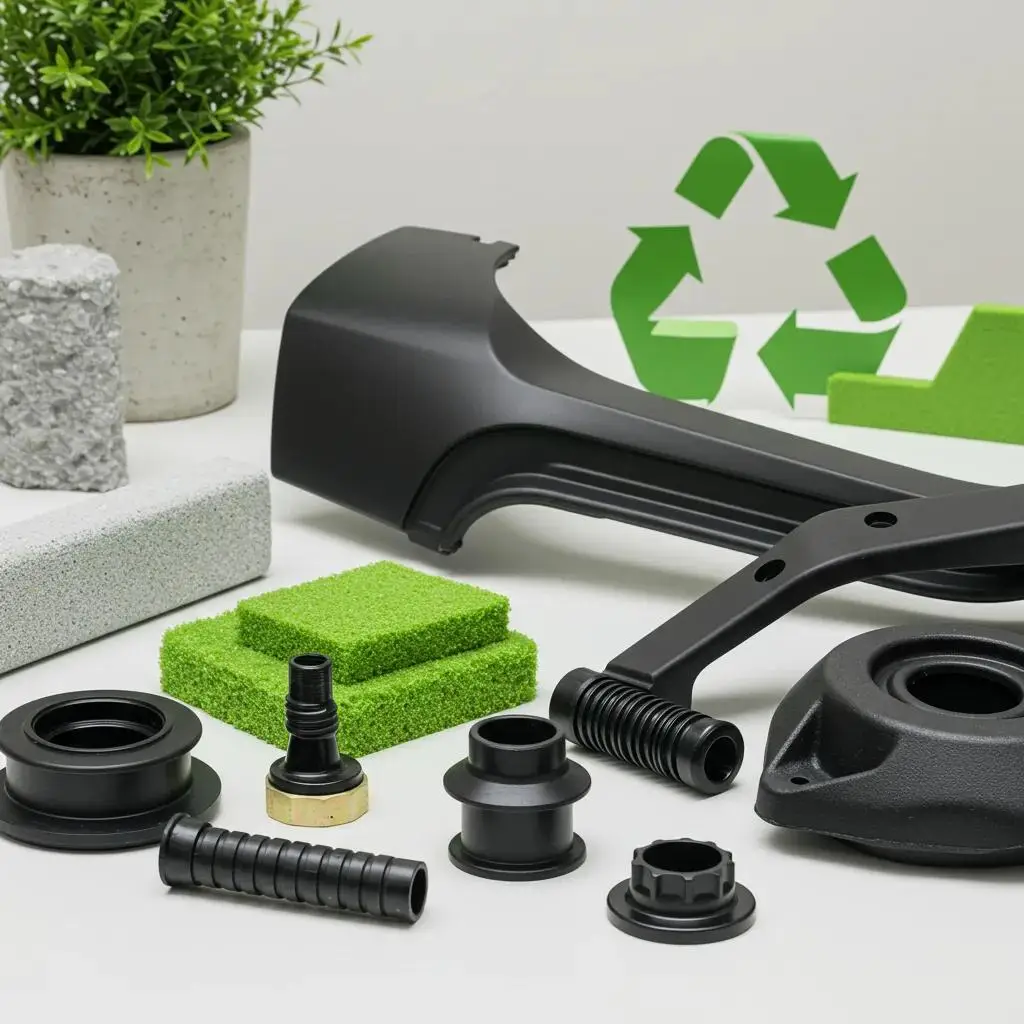
Ronningen Research & Development is committed to advancing eco-friendly practices and promoting lightweighting through strategic material selection, optimized processing, and proactive circular-economy initiatives. By harmonizing high performance with environmental stewardship, we empower OEMs to meet stringent emissions regulations and ambitious sustainability targets.
What Role Do Bioplastics and Recycled Materials Play in Automotive Parts?
Bioplastics derived from renewable feedstocks and post-consumer recycled resins offer a pathway to significantly lower carbon footprints and reduce reliance on virgin petrochemicals. These materials are increasingly used in applications such as interior panels, seat back shells, and non-structural trim components. Through careful process adjustments, we ensure consistent melt flow and mechanical properties that rival traditional material grades.
How Does Plastic Injection Molding Contribute to Enhanced Vehicle Fuel Efficiency?
Lightweighting achieved through optimized part design and advanced thin-wall molding strategies can reduce overall vehicle mass by up to 10 percent. This directly translates into measurable improvements in fuel efficiency and extended EV driving range. Every kilogram saved contributes to significant lifecycle energy savings, impacting both miles per gallon and electric-vehicle travel distance.
What Innovations Are Driving Sustainable Automotive Plastic Manufacturing?
Industry 4.0 connectivity, AI-driven process optimization, and the implementation of digital twins are key innovations driving reduced cycle times and minimized energy consumption. Closed-loop pelletizing systems enable the efficient reuse of sprues and runners, while mold-integrated sensors provide real-time material usage monitoring. Collaborative partnerships with leading resin suppliers are advancing bio-based polymer chemistries and facilitating certifications for recycled-content compliance.
What Quality Standards and Certifications Guarantee the Reliability of Automotive Plastic Parts?
Unwavering adherence to rigorous automotive quality standards is fundamental to producing safe, durable, and regulatory-compliant plastic components. Ronningen Research & Development aligns all processes with international and industry-specific certifications to guarantee exceptional performance under the demanding conditions experienced in vehicles.
Which ISO and Automotive Industry Certifications Does Ronningen Maintain?
Ronningen Research & Development operates under a robust ISO 9001 quality management system and meets the stringent requirements of IATF 16949 for automotive production. These certifications establish rigorous controls for design, process validation, and continuous improvement, ensuring every project aligns perfectly with OEM quality standards and traceability mandates.
How Are Quality Control and Testing Executed for Automotive Plastic Components?
Our comprehensive quality control procedures include meticulous first-article inspections, continuous in-process monitoring, and thorough final acceptance testing. Automated vision systems verify surface finish and color consistency, while CMM measurements confirm critical dimensions. Advanced mechanical testing—including tensile, impact, and thermal cycling—validates material performance against precise specification requirements.
Why Are Quality Standards Absolutely Critical for Automotive OEM Plastic Injection Services?
Automotive OEMs require components that can reliably withstand extreme vibration, fluctuating temperature ranges, and constant chemical exposure throughout the vehicle’s operational lifespan. Adherence to recognized quality standards significantly reduces the risk of field failures, minimizes warranty costs, and ensures ongoing regulatory compliance for safety-critical components in global markets.
Ronningen Research & Development’s integrated Chicago services—spanning DFM and expert toolmaking to precision molding, sustainable material solutions, and certified quality control—position us as the reliable partner for OEMs and product developers seeking custom automotive plastic solutions. By harnessing advanced techniques, deep engineering expertise, and responsive local support, we accelerate innovation, drive down costs, and contribute to the development of the next generation of lightweight, fuel-efficient vehicles. To explore our extensive project capabilities or request a personalized quote, connect with Ronningen’s automotive injection molding specialists today.
Discuss your project
Talk with the Ronningen team
Share your part design, material requirements, expected quantities and delivery needs. Our team can review the next steps with you.