
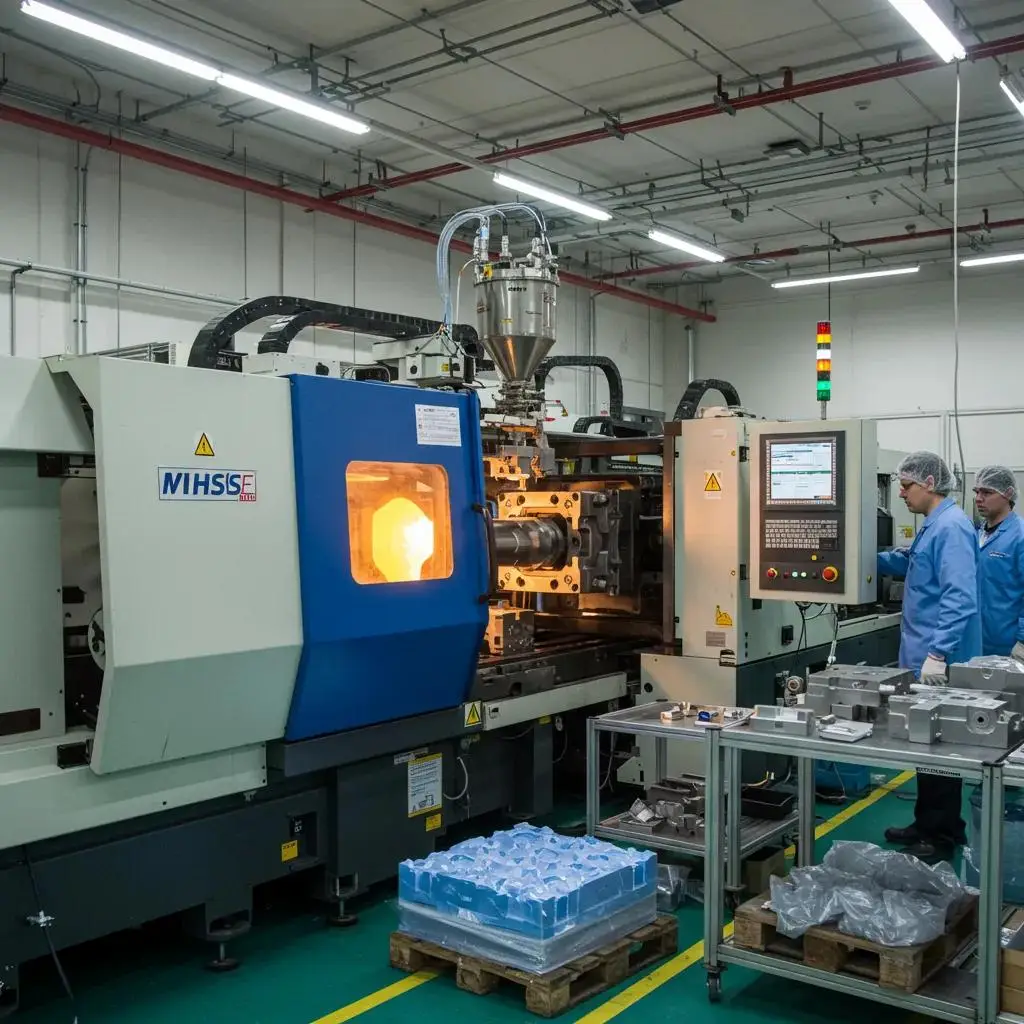
Precision Electronics Injection Molding for Chicago OEMs
Chicago’s leading electronics industries require highly precise plastic injection molding solutions that blend cutting-edge material science, swift prototyping, and rigorous quality assurance. Ronningen Research & Development harnesses advanced polymer processing, ISO-certified cleanroom facilities, and deep local expertise to support Fortune 100 and 500 OEMs, manufacturers, engineers, and product visionaries with comprehensive electronics component production. This guide delves into what sets Ronningen R&D apart in the Chicago market, explores key applications across diverse sectors, details our state-of-the-art molding capabilities, surveys optimal material selections, outlines our streamlined concept-to-production journey, highlights the industries we serve, addresses common questions, and explains how collaborative OEM partnerships accelerate project success. By merging technical insights with practical guidance, we illustrate how precision injection molding in Chicago can meet demanding performance, regulatory, and cost objectives while driving innovation and shortening your time to market.
Why Partner with Ronningen Research & Development for Electronics Molding in Chicago?
Achieving precision in electronics injection molding demands profound process understanding, robust material science, and a local presence for agile iteration and unwavering quality. Ronningen Research & Development integrates proprietary DFM (design for manufacturability) strategies with ISO Class 8 cleanroom production to minimize contamination risks and achieve tolerances finer than ±0.01 mm. Our array of advanced 32 to 150-ton presses, complemented by automated inspection systems, ensures dependable, high-volume output for critical components like housings, connectors, and micro-parts.
Before selecting your molding partner, consider these essential advantages:
- Accelerated prototyping and tooling services that can cut lead times by up to 40 percent.
- Versatile multi-material capabilities, including insert molding and overmolding, for integrated, complex assemblies.
- A conveniently located Chicago facility facilitating just-in-time delivery and seamless on-site collaboration.
- Specialized compliance for demanding sectors such as medical, aerospace, telecommunications, automotive, and general electronics.
This unique combination of speed, material adaptability, and localized support empowers Chicago-based innovators to push boundaries without compromising on reliability or regulatory adherence.
What specialized knowledge does Ronningen R&D bring to electronics injection molding?
Our engineering team excels in polymer rheology, micro-molding techniques, and advanced mold flow analysis to perfect gate design and eliminate sink marks. This profound expertise enables the creation of intricate geometries with uniform wall thicknesses and optimized cycle times, supporting both high-volume production and precision prototyping needs.
How does Ronningen R&D facilitate custom electronics plastic molding projects?
From initial CAD review through automated sampling, Ronningen R&D employs a cycle of iterative mold trials and SPI-grade mold polishing to ensure superior part quality. Dedicated project managers meticulously oversee tooling, material sourcing, and validation testing, guaranteeing a smooth and efficient custom project execution.
Which Chicago industries benefit from Ronningen’s advanced molding services?
Leading medical device OEMs, aerospace component manufacturers, telecommunications equipment providers, and automotive electronics integrators in the Chicago area depend on Ronningen’s injection molding expertise to meet exacting requirements for biocompatibility, lightweighting, signal integrity, and thermal resistance.
How does our Chicago location enhance service and project momentum?
Our strategically located Chicago facility allows for rapid on-site mold adjustments, real-time quality assessments, and close proximity to key OEM partners. This geographical advantage significantly improves time-to-market, mitigates logistical risks, and cultivates stronger, more collaborative client relationships.
What Are the Primary Applications of Electronics Injection Molding in Chicago?
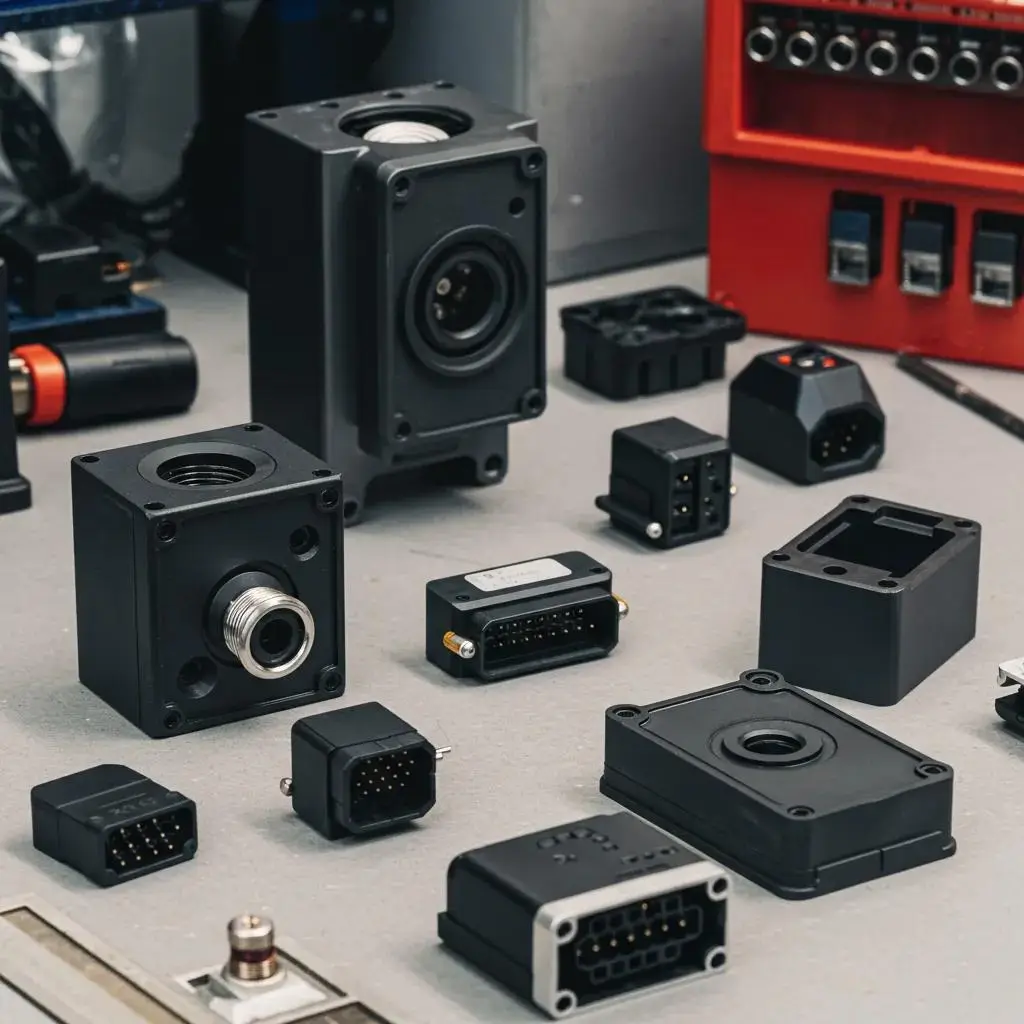
Electronics injection molding transforms molten thermoplastics into highly functional components such as protective housings, precise connectors, sensitive sensor enclosures, and robust structural frames. This versatile process facilitates exceptional design freedom, inherent electrical insulation, integrated shielding capabilities, and the consolidation of multiple features into a single, efficient manufacturing step.
Which electronic components are frequently manufactured using injection molding?
Commonly produced parts include housings for consumer electronics, RF connector shells, protective sensor covers, circuit board retainers, and secure battery compartments. These components benefit immensely from tight dimensional control, consistent dielectric properties, and integrated mounting solutions.
How is injection molding utilized in medical electronics production?
Medical electronics demand materials that are biocompatible, sterilizable, and produced under stringent contamination controls. Our injection molding processes, conducted within ISO Class 8 cleanrooms, yield diagnostic sensor housings, infusion pump components, and wearable monitor casings using FDA-approved, medical-grade plastics.
What are the specific requirements for aerospace electronics plastic molding?
Aerospace electronics necessitate high-performance polymers like PEEK and Ultem for superior temperature resilience and significant weight reduction. Injection molding produces cockpit instrument bezels, avionics connector shells, and UAV sensor housings that rigorously adhere to AS9100 standards.
How does injection molding serve the telecommunications electronics sector in Chicago?
Telecommunications components, such as fiber-optic connector bodies and antenna radomes, require materials with excellent signal transparency and robust moisture resistance. Our molded assemblies incorporate integrated snap-fit features and EMI shielding elements to ensure unwavering network integrity.
What automotive electronics parts are effectively produced through injection molding?
Automotive applications, including sensor housings, control module enclosures, and wire harness connectors, commonly utilize flame-retardant nylon and polycarbonate blends. Injection molding ensures these parts meet stringent requirements for heat resistance, vibration dampening, and compliance with ISO/TS 16949 standards.
What Advanced Injection Molding Capabilities Does Ronningen R&D Provide for Electronics?
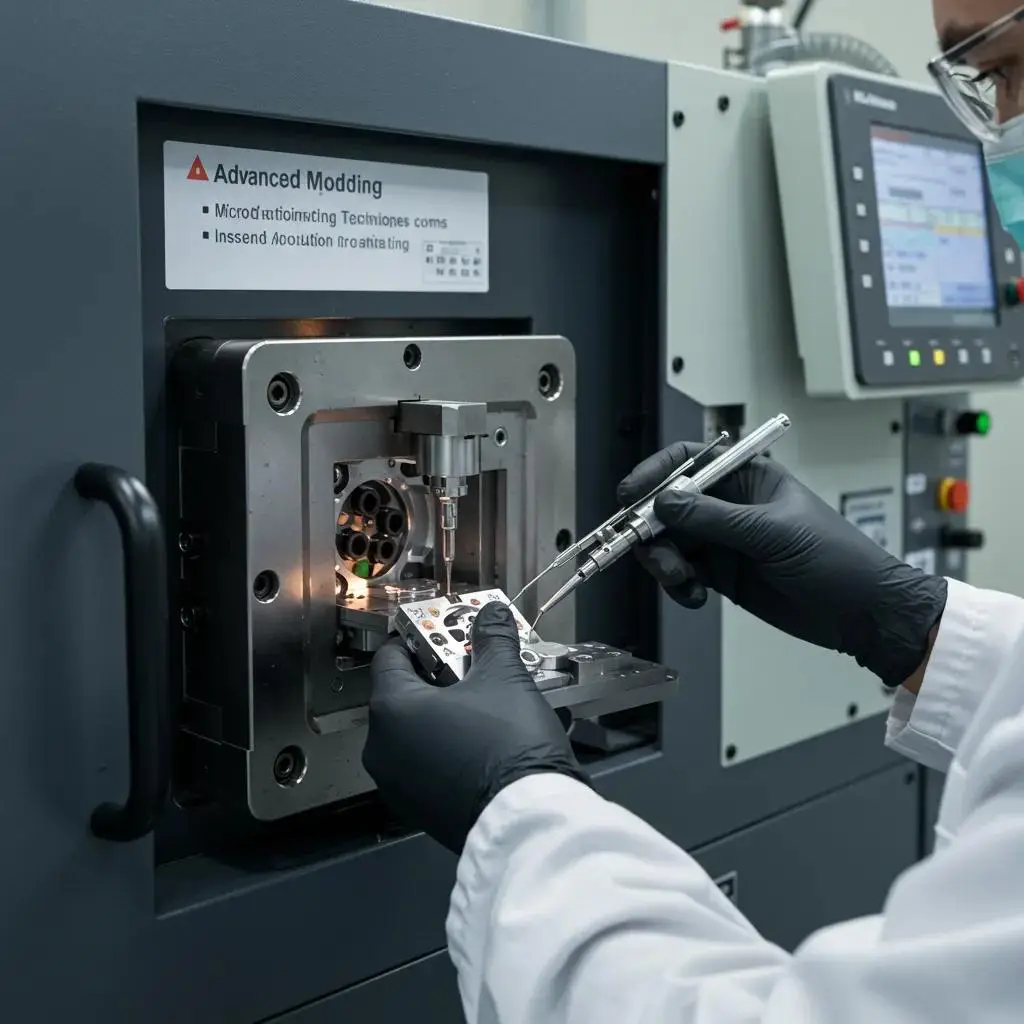
Ronningen R&D integrates precision molding, micro-injection, insert molding, rapid prototyping, and cleanroom manufacturing to address the most demanding electronics component challenges. Our advanced process controls and in-house tool machining capabilities offer a comprehensive, end-to-end service, guiding your project from initial design concept through to full-scale serial production.
How does precision injection molding elevate the quality of electronics components?
Precision molding achieves tolerances as fine as ±0.005 inches with exceptional repeatability by meticulously controlling mold temperature, injection speed, and screw back-pressure. This rigorous control results in uniform wall sections and minimizes internal stress, ensuring consistent and reliable electrical performance.
What is micro injection molding and its significance in electronics manufacturing?
Micro injection molding is specifically designed to produce components weighing less than a gram with feature sizes below 0.5 mm, making it ideal for miniaturized connectors and advanced medical microsensors. Utilizing high-precision micro tooling and specialized screw designs, we ensure accurate shot weights and faithful reproduction of the finest details.
How do insert molding and overmolding enhance the functionality of electronic parts?
Insert molding seamlessly embeds metal contacts, threaded inserts, and shielding foils directly within plastic housings, significantly reducing subsequent assembly steps. Overmolding applies soft elastomers onto rigid substrates, enhancing sealing properties and providing ergonomic grip, resulting in robust, multi-material assemblies.
What cleanroom manufacturing standards does Ronningen R&D uphold?
Our facility operates under strict ISO Class 8 cleanroom protocols, featuring HEPA-filtered airflow, comprehensive gowning procedures, and continuous particle monitoring. These stringent controls are essential for preventing contamination in the production of medical devices and other high-reliability electronics.
How does rapid prototyping accelerate the development of electronics products?
Rapid prototyping leverages 3D-printed mold inserts, silicone molding techniques, and short-run injection processes to validate form, fit, and function within a matter of days. Early-stage prototypes provide crucial insights for design for manufacturability (DFM) optimizations, potentially reducing development cycles by up to 50 percent.
What Are the Optimal Materials for Electronics Injection Molding in Chicago?
Selecting the right materials for electronics molding involves carefully balancing mechanical strength, electrical characteristics, thermal stability, and regulatory compliance. Our range of engineering thermoplastics and specialized polymer blends allows us to tailor performance precisely to your application needs.
| Material | Key Property | Typical Application |
|---|---|---|
| ABS | Superior impact resistance | Durable housings for consumer electronics |
| Polycarbonate | Excellent heat resistance, optical clarity | High-visibility display bezels, transparent protective covers |
| PEEK | Exceptional high-temperature performance | Aerospace connectors, medical components requiring sterilization |
| Nylon (PA 6/6) | Outstanding chemical resistance | Robust sensor housings for automotive applications |
| Conductive Polymer | Effective EMI shielding | Enclosures requiring integrated electromagnetic interference protection |
What engineering plastics are commonly selected for electronic components?
ABS, polycarbonate, and various nylon blends are standard choices for rigid housings, offering excellent dimensional stability, impact resilience, and the design flexibility needed for integrated snap-fit features.
How do conductive polymers enable integrated electrical functionality in molded parts?
Our conductive polymer compounds are formulated with specialized carbon or metal fillers, enabling the creation of molded parts that provide effective EMI shielding and possess static-dissipative properties, crucial for maintaining signal integrity in sensitive telecom and computing equipment.
What flame-retardant materials meet stringent electronics safety standards?
We utilize halogen-free flame-retardant grades of polycarbonate and nylon that meet UL 94 V-0 flammability ratings. These materials are essential for protecting assemblies in demanding applications like automotive EV modules and under-hood sensor systems.
How are high-performance polymers like PEEK utilized in aerospace and medical electronics?
PEEK’s remarkable thermal stability and resistance to aggressive chemicals make it the material of choice for autoclave-sterilized medical sensor components and lightweight, high-strength aerospace avionics housings.
How Does the Ronningen R&D Process Guide Electronics Injection Molding from Concept to Production?
Our meticulously structured concept-to-production workflow ensures that every electronics injection molding project progresses seamlessly from initial design validation through to high-volume manufacturing. Each phase is designed for optimal collaboration, rapid tooling deployment, and the implementation of rigorous quality control measures.
What are the critical steps in the design and prototyping phase for electronics molding?
Initially, our cross-functional teams conduct thorough reviews of CAD models, focusing on draft angles, wall thickness consistency, and optimal gate locations to ensure manufacturability. Subsequently, we utilize rapid prototype molds or 3D-printed inserts to produce validation parts, allowing for comprehensive functional testing and ergonomic assessment.
How is tooling developed for custom electronics injection molding projects?
We machine precision molds using high-grade hardened steel or aluminum, incorporating advanced features such as water-temperature control channels and sophisticated ejector systems. Concurrent mold flow simulations are employed to refine runner designs and cooling layouts, optimizing cycle times and part quality.
What quality control measures guarantee consistent performance for electronics components?
We implement automated vision inspection systems, coordinate measuring machines (CMM), and in-line dimensional verification to meticulously check critical features. Furthermore, electrical conductivity and dielectric strength tests are performed to confirm material properties and overall part integrity.
How are assembly and post-processing integrated with injection molding services?
Our value-added services encompass a range of essential processes, including ultrasonic welding, heat staking of metal inserts, precision pad printing, and conformal coating. By integrating these assembly steps, we minimize handoffs and significantly accelerate the delivery of your final electronics modules.
Which Chicago Industries Depend on Advanced Electronics Injection Molding Services?
Local OEMs across the medical, aerospace, telecommunications, and automotive sectors rely on our precision molding capabilities to meet highly specialized requirements and stringent regulatory mandates. Injection molding empowers product differentiation through sophisticated part integration and superior material performance.
What are the unique injection molding needs of the medical electronics industry?
Medical electronics demand biocompatible resins, fully traceable materials, and surfaces resistant to sterilization processes. Molded components for diagnostic devices and wearable sensors must strictly comply with FDA and ISO 13485 standards.
How does aerospace electronics molding align with AS9100 standards?
Aerospace components require exceptionally tight tolerances, advanced lightweight polymers, and rigorous certification for flight safety. Our injection molding of avionics connector bodies and UAV sensor parts is fully aligned with AS9100 quality management system requirements.
What specific molding solutions are needed for telecom electronics components?
Telecommunications equipment utilizes plastics characterized by low dielectric constants and excellent moisture resistance. Our molded assemblies feature integrated snap-fit mounting, precise slots for EMC gaskets, and transparent windows for optimal fiber-optic alignment.
How does automotive electronics molding address critical heat resistance and durability demands?
Automotive modules, including sophisticated sensors and control units, are manufactured using flame-retardant, glass-filled nylon resins. Injection molding ensures these components can withstand extreme under-hood temperatures, endure rigorous vibration cycles, and pass all required regulatory durability tests.
What Are Common Inquiries Regarding Electronics Injection Molding in Chicago?
Electronics injection molding is a sophisticated process involving the injection of molten polymer into a precisely engineered mold under controlled cooling and pressure, resulting in consistently high-quality plastic parts. This method is ideal for producing complex geometries, integrating advanced features, and achieving exceptional repeatability.
What exactly is electronics injection molding, and how does the process function?
Electronics injection molding is a manufacturing technique where molten plastic material is injected at high pressure into a custom-designed steel or aluminum mold cavity. Once the material cools and solidifies, the mold opens, and the finished part is ejected, yielding components with intricate details and remarkable consistency.
What are the primary advantages of plastic injection molding for electronic components?
Key benefits include highly cost-effective production at high volumes, unparalleled design flexibility for features like snap-fits and overmolds, access to a vast array of material options, and exceptional repeatability for critical component features.
Which materials are most suitable for electronics injection molding applications?
Advanced engineering plastics such as ABS, polycarbonate, nylon, PEEK, and specialized conductive or flame-retardant compounds are ideal, offering tailored mechanical, thermal, and electrical performance characteristics for a wide spectrum of electronics applications.
How does Ronningen R&D ensure precision and quality in electronics molding projects?
Through meticulous DFM reviews, advanced mold flow analysis, automated inspection protocols, and production within ISO Class 8 cleanrooms, Ronningen R&D consistently maintains tight tolerances, minimizes particle counts, and guarantees uniform material properties across all production runs.
How can Chicago OEMs and product developers initiate a custom electronics molding project?
Prospective clients are encouraged to submit their CAD files and specific part requirements for a detailed preliminary review and sample run. This process confirms material selection, part geometry, and production feasibility. Comprehensive project planning then aligns timelines, budgets, and quality objectives prior to full-scale tooling and production.
How Does Ronningen R&D Collaborate with Fortune 100 and 500 OEMs for Electronics Injection Molding in Chicago?
Building successful partnerships with leading OEMs hinges on seamless collaboration, transparent communication, and shared commitment to key performance indicators for delivery, cost, and quality. Ronningen R&D integrates dedicated project implementation teams, iterative sampling processes, and advanced analytical tools to consistently exceed partnership expectations.
What successful projects exemplify Ronningen’s expertise in electronics molding?
One notable project involved a wearable diagnostic device housing where we reduced cycle times by 30 percent while ensuring full ISO 13485 compliance. Another success was an automotive sensor connector overmolding initiative that achieved a zero-ppm defect rate across a 100,000-piece production volume.
How do OEM partnerships gain from Ronningen’s local Chicago manufacturing presence?
Our proximity to Chicago’s vibrant engineering and manufacturing hubs facilitates invaluable in-person design workshops, rapid mold trials, and responsive, on-demand production adjustments. This significantly reduces transportation lead times and strengthens overall supply chain resilience.
What value-added services are integral to supporting OEM electronics projects?
Our comprehensive suite of services includes integrated tooling maintenance, secure mold storage, custom finishing treatments, and specialized assembly operations—such as ultrasonic welding and conformal coating—all designed to streamline the transition from a plastic component to a fully realized electronics module.
How can I request a quote for custom electronics injection molding services in Chicago?
OEMs can easily submit their CAD files and detailed part specifications through our website. We will provide a comprehensive proposal outlining material options, tooling timelines, production rates, and precise cost estimates. Dedicated account representatives are available to coordinate all subsequent steps for prototype development and full-scale production planning.
As chip-level integration and multi-material assemblies continue to define the cutting edge of Chicago’s electronics innovation, partnering with Ronningen Research & Development provides OEMs and manufacturers with a trusted ally in injection molding. We are uniquely equipped to transform your most complex designs into high-performance plastic components with unparalleled speed, precision, and regulatory assurance.